LoL Wiki

4.5




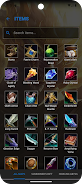






LoL Wiki is a fast, clean reference app for League of Legends players that gathers champion data, items, runes and summoner spells into one easy-to-navigate resource. With LoL Wiki you can access concise stat blocks, ability descriptions and scaling information before a match or while researching builds, and LoL Wiki also includes lore entries and high-resolution skin images for visual reference. The interface favors speed and clarity so players who need quick answers during pre-game planning or theorycrafting sessions can find what they need without clutter.
The app compiles a comprehensive champion encyclopedia with base stats, growth values, ability tooltips and clear notes on damage types and crowd-control effects so you can understand key interactions and matchups. Item pages show cost breakdowns, component-to-final upgrade paths and passive effects in plain language so build progression is easy to follow; filters let you narrow items by map, game mode and situational tags. Runes and summoner spells include cooldowns, unlock levels and short notes on common synergies, while skin galleries provide high-resolution images and simple share or download options for offline viewing.
Beyond raw numbers, the app describes fundamental gameplay mechanics important to decision-making: how ability scaling works across levels, the difference between physical and magical damage, basic on-hit and on-death interactions, and common passive synergies. Champion pages highlight typical level progression (levels 1–18), recommended ability orderings and how core stats scale over a match, giving context that helps when planning whether to prioritize early trading, wave management, or late-game scaling.
The user experience centers on fast search and intuitive navigation: type to search champions, items or spells and get instant suggestions; swipe or tap through ability tabs, build paths and lore without long load times. Filter controls and sorting options are placed where they are reachable during quick pre-game lookups. The app also supports gestures for moving between champions and has a clear backstack so you can jump back to search results quickly.
The content emphasizes planning rather than in-match automation. Item progression is shown visually from early components to full builds, and suggested core items and situational choices are identified on each page to support build planning. Players can review mid-game and late-game power spikes described in plain language so you can tailor builds to champion scaling and team compositions. The app does not provide live overlays or automated in-match coaching; it is designed as a preparatory reference and study tool.
The design is intentionally minimal: large readable type, clear stat tables and consistent color accents to separate sections. High-resolution skin art is presented on dedicated pages with captions and simple download options so images can be saved for offline viewing. Visual cues and iconography are used sparingly to keep the interface lightweight while still communicating item classes, damage types and role tags at a glance.
You can personalize the app experience by saving favorites or frequently consulted pages for faster access, and the app keeps basic cached copies of recently viewed entries so critical information is available while you are offline. Download options for skin images make it convenient to keep visual references without a constant connection. Filters and display preferences allow basic adjustments so the interface fits your workflow.
LoL Wiki supports repeated use whether you are learning new champions, experimenting with item synergies or preparing for specific matchups. The encyclopedia-style layout and concise explanations make it practical for both short pre-game checks and longer study sessions about mechanics, scaling and lore. Regularly revisiting champion pages after patches helps players track changes and refine their builds over time.
The app prioritizes readability with adjustable text sizes and clear contrast between text and backgrounds; icons and labels are designed to be recognizable for colorblind users. Lightweight assets and optimized image sizes keep load times low on a broad range of devices so the reference remains responsive even on older phones.
As a reference tool focused on accuracy and clarity, the app does not function as a live match overlay, and very recent balance updates may take some time to appear depending on update cadence. The database aims for high accuracy, but users should be aware that patch timing can affect how quickly numbers and tooltips are refreshed.