Red Flags: Infidelity Island

4.3


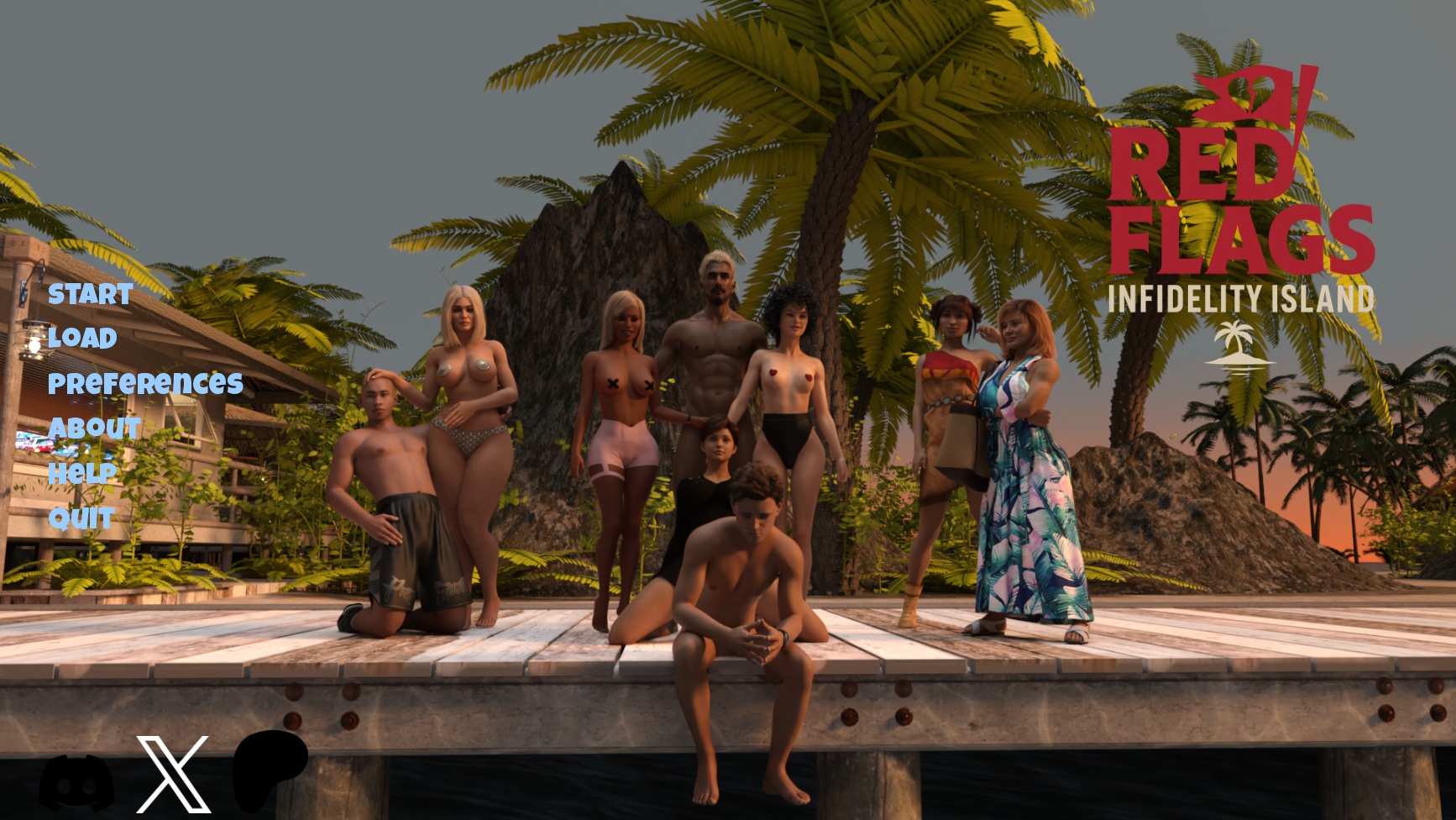





Red Flags: Infidelity Island drops you into a compact, dialogue-first drama set on a college summer getaway, where careful conversation and social reading shape every outcome. The app focuses on character beats and interpersonal tension rather than combat or complex systems, offering short episodic chapters that are easy to pick up and return to while still delivering meaningful consequences for the choices you make.
Red Flags: Infidelity Island follows a small cast—John and Mia, Hayley and Steven, and Emily and Jake—whose relationships and histories collide over the course of a tense vacation. The narrative emphasizes subtext, believable reactions, and slow escalation: accusations, misunderstandings, and past attractions surface through carefully written scenes. The setting is intentionally limited to an isolated island to keep the drama concentrated and let character interaction drive the experience.
Gameplay revolves around selecting responses in conversation and managing how relationships shift over time. Each decision affects visible relationship meters that track trust, suspicion, and attraction; these metrics make it easier to see immediate effects while still allowing for delayed consequences that may only appear in later episodes. Choices determine which scenes become available, which character moments are revealed, and which endings are reachable. The game rewards attentive reading and exploration of alternate conversational strategies, since small shifts in tone or timing can unlock new branches.
The interface is designed for comfortable touch play: tap to advance dialogue, tap a response to choose it, and long-press to review previous lines or notes. Text speed and auto-advance settings let you tailor pacing to your preference, and contextual icons appear when a choice will notably change a relationship meter. On-screen elements are kept minimal during scenes so artwork and background atmosphere remain the focal point, while clear visual cues show where decisions have lasting effects.
Progression uses an episodic chapter model with automatic save points at scene breaks and support for multiple local save slots. You can return to earlier decision points to explore alternate outcomes without losing overall progress. Multiple endings, scene branches, and unlockable moments tied to specific relationship states encourage replay; because some consequences are delayed, a single playthrough will not expose every thread, making revisits useful for uncovering deeper backstory and character detail.
Visually the game favors expressive character portraits and atmospheric island backdrops that shift with the story—from sunlit beaches to moody evening gatherings. Subtle animations and changes in posture convey emotion without relying on explicit imagery. The soundtrack supports mood and pacing with ambient tracks for quieter moments and more tense cues for confrontations; sound design includes small audio prompts to highlight pivotal choices, helping to heighten emotional feedback without overwhelming the scene.
Rather than open-world exploration, the title is scene-based and location-focused: compact sets such as a beach party, a cabin living room, a late-night dock, and casual campus hangouts each host sequences of scripted interactions. Scenes are designed to deliver concentrated dramatic beats and to avoid filler, allowing the writing to remain tight and intentional while maintaining a steady narrative rhythm across chapters.
Customization is oriented toward readability and comfort: adjustable text size, color-contrast options, subtitle toggles, and a simplified control mode make the experience accessible to a wide audience. The game supports offline single-player play with all progress stored locally, making it convenient to play without a constant connection. Accessibility features such as adjustable text speed, clear contrast themes, and the ability to review past dialogue enhance usability for different reading styles.
The main challenge is interpretive: reading character cues, anticipating how a remark might be received, and planning conversational strategies that open desired scenes. There are no timed reflex challenges or complex puzzles; success comes from observation, patience, and replaying key choices to see their ripple effects. The experience is deliberately narrow in scope, specializing in interpersonal drama for players who prefer narrative nuance over broad gameplay systems.
Version 0.3 introduces the core island scenario and refines the central cast—John, Mia, Hayley, Steven, Emily, and Jake—while improving dialogue flow and save stability. This update also delivers UI tweaks and expanded accessibility options to smooth the reading experience and deepen the narrative threads available in Red Flags: Infidelity Island, encouraging players to explore multiple paths through the island’s tense social landscape.